Technology Decision IntelligenceLess pitch. More proof.

Vendor and market news

See what changed. Understand why it matters.

News becomes useful when it changes the decision context.

1.Define

2.Evidence

3.Compare

4.Decide

5.Prove

PROVE TDI interprets vendor and market developments through their relevance to buyers, evidence, implementation and governed technology decisions, with attribution to original sources.

RequirementsEvidenceCompareApproveOutcome

Signal

What materially changed in the vendor or market

Proof gap

What the announcement does not yet demonstrate

Decision test

What PROVE TDI would verify before it affects a recommendation

Latest signals

From announcement to decision evidence.

PROVE TDI separates the observable market signal from the supplier claim, then identifies the evidence needed before that signal should influence selection, scoring or approval.

PartnershipABB
4 Sept 2026
Building automationEnergy managementElectrificationBrownfield retrofit

ABB is turning a complex live stadium into a brownfield proof point for integrated energy and building automation

ABB and Borussia Dortmund expanded their long-running technology relationship into a strategic Energy Management Partnership at SIGNAL IDUNA PARK. The programme combines energy management, electrical distribution, KNX-based building automation, HVAC and planned storage and charging infrastructure through an open, scalable architecture intended to work with the stadium's existing systems and extend across the wider BVB estate.

Decision impact

For operators of large existing estates, the project is relevant because it tests whether energy, electrical and building-control modernisation can be layered onto complex legacy infrastructure without a wholesale rebuild. If the architecture performs as described, it strengthens ABB's case where interoperability, operational continuity and phased portfolio modernisation are more important than greenfield standardisation.

What is not proven

A strategic partnership and vendor-described architecture do not independently prove energy savings, lower lifecycle cost, seamless third-party interoperability or resilient operation under every event and fault condition. The source also does not establish which outcomes are attributable specifically to ABB rather than broader estate upgrades and operating changes.

PROVE TDI would verify

PROVE TDI would verify the installed architecture and protocols, read and write integration depth, commissioning scope, cybersecurity boundaries, failover and event-day resilience, ISO 50001 measurement baseline, actual energy and maintenance outcomes, expansion across the wider BVB portfolio, lifecycle support commitments and referenceability before allowing the project to influence a building-platform recommendation.

Original: ABB and Borussia Dortmund Turn Germany’s Largest Football Stadium into a Showcase for Smart Energy Management

Publisher: ABB · Author: not stated by source

Read original
PartnershipPTC
4 Sept 2026
Digital threadField serviceTechnical contentAI

PTC and LTTS are packaging engineering-to-service data continuity as an operating model, not just a software integration

PTC and Larsen & Toubro Technology Services introduced ServiceForward, a joint approach for moving engineering and product information into field-service execution. PTC positions Arbortext, Windchill, ServiceMax and Servigistics as the platform backbone while LTTS provides migration, content engineering, integration, AI accelerators and managed operations. The model is designed to start with a bounded pilot and scale across product lines and service content.

Decision impact

For manufacturers evaluating digital-thread, service-management or asset-support platforms, this strengthens PTC's proposition around continuity from engineering truth into technician workflows. It also makes delivery-partner capability a more explicit part of the technology decision because the proposed value depends on both the PTC stack and LTTS transformation work rather than software configuration alone.

What is not proven

The launch does not prove a single production data model across the PTC products, lower first-time-fix cost, faster service readiness or repeatable AI quality across different legacy content estates. It also does not establish how much migration, integration and managed-service effort is required before the connected model produces measurable operational value.

PROVE TDI would verify

PROVE TDI would verify reference customers, target architecture and data lineage, product and LTTS licensing boundaries, migration effort, role and permission governance, standards and compliance coverage, ServiceMax and Servigistics hand-offs, AI grounding and review controls, support ownership, pilot success criteria and measured service outcomes before allowing the partnership to improve a digital-thread or service-operations recommendation.

Original: Introducing ServiceForward: One Connected Path to Revenue

Publisher: PTC · Author: Coray Thibaut de Maisieres

Read original
ProductIES
4 Sept 2026
Building performanceHVAC designBIM-to-BEMCompliance

IESVE 2026 is tightening the path from building geometry to defensible performance analysis

IES released IESVE 2026 with workflow changes spanning HVAC design, data-centre modelling, regulatory compliance and BIM-to-BEM interoperability. The release adds updated ASHRAE ventilation workflows, TM59:2026 support and previews IES Sync for Revit as a route to reduce manual geometry rework between authoring and simulation environments.

Decision impact

For design, engineering and building-performance teams, the release strengthens IESVE's case where modelling rigour must coexist with faster regulatory and BIM workflows. The forthcoming Revit connection is particularly relevant where repeated model translation is a material source of time, data loss or coordination risk.

What is not proven

A release announcement does not prove model fidelity across every import condition, lower total modelling effort, error-free Revit synchronisation or consistent compliance outcomes across jurisdictions. The Revit synchronisation capability is also described as forthcoming rather than established production evidence.

PROVE TDI would verify

PROVE TDI would verify supported Revit and geometry scenarios, round-trip data behaviour, model-change lineage, validation controls, simulation reproducibility, jurisdiction-specific compliance coverage, performance on large models and production references before changing interoperability or implementation-risk scoring.

Original: IESVE 2026: One release. Four ways to own your most important workflows.

Publisher: IES · Author: George Lyons

Read original
OutcomeJohnson Controls
4 Sept 2026
OpenBlueEnergy managementPredictive maintenanceResearch facilities

Johnson Controls is putting quantified OpenBlue expectations against a complex research-campus deployment

Johnson Controls published a Cold Spring Harbor Laboratory deployment case covering nearly 90 buildings, with building-level metering, connected systems and a shift toward proactive maintenance. The laboratory estimates OpenBlue can reduce electricity, natural-gas and fuel costs by 6 to 7 percent, creating a useful outcome hypothesis rather than only a platform-capability claim.

Decision impact

For campus and research-estate buyers, the case is relevant because it links digital-building architecture to explicit operational and energy expectations in a heterogeneous, mission-sensitive estate. It provides a stronger basis for defining measurable success criteria in comparable evaluations.

What is not proven

The published case describes expected and early operational value, not independently verified long-term savings attributable solely to OpenBlue. Estate upgrades, operating changes, weather, tariffs and other interventions can affect the reported result.

PROVE TDI would verify

PROVE TDI would verify the measurement baseline, normalization method, metering coverage, implementation scope, avoided-cost assumptions, maintenance KPIs, attribution method and actual-versus-expected results over time before using the case as outcome evidence in another decision.

Original: How OpenBlue is modernizing energy and equipment management at a historic research campus

Publisher: Johnson Controls · Author: not stated by source

Read original
OperationsPTC
3 Sept 2026
ANZOnshapeCAD/PDMRegional support

PTC is adding local ANZ delivery capacity as Onshape adoption scales

PTC opened a Melbourne hub to support its Onshape cloud-native CAD and PDM business across Australia and New Zealand. PTC says the office will support customer engagement, technical support and business development while helping expand the local partner ecosystem as regional cloud-CAD adoption grows.

Decision impact

For ANZ buyers, local technical and account coverage can reduce a practical supplier-risk factor in cloud-CAD and PDM decisions: access to in-region expertise for adoption, escalation and partner delivery. It also indicates that PTC is committing additional go-to-market capacity to Onshape rather than treating the region solely through remote coverage.

What is not proven

Opening a regional office does not establish support service levels, implementation capacity, migration quality, data-residency options, partner competence or customer outcomes. It also does not prove that local presence changes contractual escalation, commercial terms or product availability.

PROVE TDI would verify

PROVE TDI would verify local staffing and technical scope, support hours and escalation SLAs, partner certifications and delivery capacity, ANZ contract and data-residency terms, onboarding and migration references, customer-retention evidence, and whether the Melbourne operation has accountable authority for implementation and support before allowing the footprint signal to affect supplier-risk scoring.

Original: PTC Expands Footprint in Australia and New Zealand with New Melbourne Hub

Publisher: PTC · Author: not stated by source

Read original
Strategydormakaba
3 Sept 2026
OwnershipCorporate governanceCapital structureSupplier resilience

dormakaba clears a takeover-law step in its proposed ownership simplification, but shareholder approval still matters

dormakaba published the Swiss Takeover Board's decision on the proposed opting-out clause linked to the ownership-structure simplification announced on 1 September. The board found the proposed clause valid under takeover law subject to transparency requirements and shareholder approval, including a majority-of-the-minority vote, and determined that the transaction would not itself trigger a mandatory offer by the Mankel family shareholders.

Decision impact

For enterprise buyers assessing long-term supplier resilience, the development is relevant because dormakaba is changing a legacy ownership structure that has existed since the Dorma-Kaba merger. A simpler listed-company structure could improve governance transparency and comparability, but the transition remains conditional and should be treated as a supplier-governance signal rather than a product or operating-performance improvement.

What is not proven

The Takeover Board decision does not mean the ownership simplification is completed, does not prove that governance or capital allocation will improve in practice, and does not establish any change to product investment, service continuity, cybersecurity, regional delivery capacity or customer outcomes.

PROVE TDI would verify

PROVE TDI would track the 20 October shareholder vote, final ownership and voting-rights structure, any resulting changes to board or control arrangements, capital-allocation implications, credit and liquidity indicators, and evidence of continuity in product roadmaps and customer support before allowing the governance change to influence supplier-resilience assessment.

Original: dormakaba announces decision of Swiss Takeover Board on proposed opting-out

Publisher: dormakaba Group · Author: not stated by source

Read original
ProductBrivo
3 Sept 2026
Access controlWireless locksEnterprise securityRetrofit economics

Brivo is extending cloud access control deeper into interior doors where hardwired economics often break down

Brivo announced availability of the Schlage XE360 Series with RealSync lock within Brivo Security Suite. The integration uses continuous Wi-Fi connectivity for supported secondary and interior doors, reducing reliance on traditional panels, gateways and new cabling. Brivo says this can lower cost per door by up to 70%; that figure remains a vendor claim rather than a proven buyer outcome.

Decision impact

For organisations modernising existing estates, this can materially change retrofit economics and the number of doors for which electronic access control is viable. It also moves Wi-Fi coverage, battery and maintenance design, offline behaviour and cross-vendor lifecycle dependencies higher in the selection model rather than treating the lock as a simple peripheral.

What is not proven

The announcement does not prove 70% savings across buyer estates, universal suitability for existing wireless environments, battery performance under real traffic patterns, equivalent resilience to hardwired architectures, or consistent integration quality across every supported Schlage and Brivo configuration.

PROVE TDI would verify

PROVE TDI would verify the supported lock and firmware matrix, network and offline behaviour, battery and maintenance assumptions, cybersecurity and credential flows, API and event completeness, door-by-door total-cost assumptions, installation constraints, service responsibilities, reference deployments and the exact conditions behind the claimed cost reduction before changing lifecycle-cost or recommendation scoring.

Original: Brivo Extends Enterprise Security to Every Door in Every Building

Publisher: Brivo · Author: not stated by source

Read original
ProductAdvantech
3 Sept 2026
Edge AIIndustrial computingVideo analyticsPrivate AI

Advantech is combining higher-density edge AI compute with model and data management in one deployment stack

Advantech announced AIR-411, a compact edge-AI high-performance computing system built around Intel Core 200S processors with configurable GPU acceleration. It targets inspection, medical imaging, private LLM and RAG workloads, and multi-channel video analytics, while integrating Advantech Edge AI SDK and WEDA for distributed model and data management. Advantech states the system is available for ordering.

Decision impact

For buyers selecting edge infrastructure, the comparison increasingly shifts from raw compute specifications toward the combined hardware, runtime, model-management and operational lifecycle stack. That is particularly relevant where cloud latency, data sovereignty, privacy or resilient local operation are explicit decision constraints.

What is not proven

The announcement does not establish production throughput for a buyer's models, deterministic performance under concurrent workloads, long-term driver and operating-system compatibility, power and thermal behaviour in the intended environment, or lower lifecycle cost than alternative edge-GPU architectures.

PROVE TDI would verify

PROVE TDI would verify exact CPU, GPU and accelerator configurations, benchmark methodology, model and framework compatibility, WEDA licensing and management boundaries, container and orchestration support, power and thermal envelope, cybersecurity and update policy, supply and support horizon, remote fleet operations, pricing and representative production deployments before changing performance or total-cost scoring.

Original: Advantech AIR-411 Accelerates AI Inference and Data Management for Inspection, Medical Imaging, Edge LLMs, and Video Analytics

Publisher: Advantech · Author: not stated by source

Read original
MarketSchneider Electric
3 Sept 2026
Data centre coolingEnergy efficiencyLiquid coolingValidation

Schneider's nanofluid lab results are a useful efficiency signal, but not yet a field-proven cooling assumption

Schneider Electric published closed-loop laboratory testing of Blue Snow Frontier Technologies' AQUENE graphene nanofluid against a PG25 reference fluid. Schneider reports 30–50% lower fluid approach temperatures in the test configuration and models a potential 10–15% PUE improvement under similar conditions, while explicitly identifying field testing as the next validation step.

Decision impact

For high-density data-centre energy and retrofit decisions, the result is relevant because cooling-fluid choice could become an additional efficiency lever without wholesale plant replacement. The signal should enter a decision model as emerging technical evidence rather than as a deployable standard or guaranteed business-case benefit.

What is not proven

Laboratory performance does not prove production PUE improvement, long-term fluid stability or contamination behaviour, materials compatibility, warranty acceptance, maintainability, safety and environmental implications, or repeatability across different chiller and liquid-cooling architectures.

PROVE TDI would verify

PROVE TDI would verify independent and field performance data, test conditions and baseline, fluid chemistry and long-term stability, OEM and chiller warranty compatibility, materials and filtration implications, operational procedures, safety and environmental documentation, retrofit cost, monitoring and verification design, and customer references before allowing the claimed efficiency effect into a business case or recommendation.

Original: New nanofluid delivers measurable improvements in data center cooling tests

Publisher: Schneider Electric · Author: Florian Hanslik and Bernard Sagaiyaraj

Read original
ProductHexagon
3 Sept 2026
AutonomySafetyMiningCollision prevention

Hexagon is moving collision avoidance from warning into automatic machine intervention with a new Level 9 safety platform

Hexagon launched the next generation of its Vehicle Intervention System for surface mining, combining autonomous collision prevention, safety-rule enforcement and fail-safe protection in an EMESRT Level 9 system. The platform can inhibit propulsion, apply retardation or braking, enforce safe following distances and move a vehicle to a safe state after a critical system fault. Hexagon also cites independent Technology Readiness Level 4 validation by the University of Pretoria and production deployments of the underlying VIS platform since 2018.

Decision impact

For buyers evaluating safety-critical mobile-equipment technology, the decision moves beyond detection accuracy into intervention authority, fail-safe behaviour, OEM compatibility and lifecycle governance. An independently stage-gated system that can act on the machine rather than only warn the operator raises the competitive baseline for collision-prevention and human-assist platforms in autonomous or semi-autonomous operations.

What is not proven

A global launch and TRL4 validation do not prove consistent performance across every mine, vehicle class, weather condition or operating scenario. They also do not establish nuisance-intervention rates, full regulatory acceptance, cyber resilience, liability allocation, implementation effort or measurable incident reduction for the new generation in production.

PROVE TDI would verify

PROVE TDI would verify the complete independent test report and standards mapping, OEM and vehicle compatibility, sensing and intervention latency, fail-safe and override logic, cybersecurity architecture, maintenance and calibration requirements, site-integration dependencies, false-positive and false-negative behaviour, regulatory acceptance and reference deployments before allowing the launch to change a safety or autonomy recommendation.

Original: Hexagon launches next-generation vehicle intervention system for surface mines

Publisher: Hexagon · Author: not stated by source

Read original
MarketABB
3 Sept 2026
Critical infrastructureAutomationCybersecurityLifecycle modernisation

ABB is using System 800xA in a 30-year nuclear life-extension programme, strengthening its critical-infrastructure automation proof point

ABB was awarded a contract through Ansaldo Nucleare to modernise control and safety systems at Unit 1 of Romania's Cernavodă nuclear power plant. ABB's scope includes the Ability System 800xA distributed control system, emergency-shutdown functions for Category B and C systems, cybersecurity engineering and testing, plus selected Category A standby-generator functions. The programme is intended to support a further 30 years of operation for the unit.

Decision impact

For organisations evaluating long-life automation platforms, this is a meaningful supplier-capability signal because it places ABB's control architecture in a safety-critical, highly regulated modernisation programme where legacy continuity, lifecycle support and cyber controls matter as much as new functionality. It strengthens the case for testing ABB on brownfield-modernisation and critical-infrastructure requirements rather than only on greenfield automation features.

What is not proven

A contract award does not prove successful migration, operational availability, cyber resilience or safety performance after implementation. Nuclear-sector engineering requirements are also materially different from commercial-building or general industrial environments, so the project cannot be treated as direct evidence that every ABB automation deployment inherits the same controls or assurance level.

PROVE TDI would verify

PROVE TDI would verify implementation milestones and acceptance testing, safety qualification and applicable standards, cybersecurity architecture and independent assurance, migration and outage strategy, redundancy and failover behaviour, lifecycle-support commitments, software and hardware obsolescence policy, reference performance after commissioning and which elements of the architecture transfer to the buyer's actual operating environment.

Original: ABB modernizes automation systems to extend life of nuclear power plant in Romania by 30 years

Publisher: ABB · Author: not stated by source

Read original
ProductAutodesk
3 Sept 2026
FusionManufacturingAPIProduct data

Autodesk is expanding Fusion across modelling, manufacturing and automation without separating the workflows

Autodesk's September Fusion update adds performance improvements, expanded sheet-metal and PMI workflows, manufacturing enhancements, greater product-data control and a broader API surface including additional modelling and construction-geometry automation. The material signal is continued consolidation of design, manufacturing and programmable workflow capability inside one environment.

Decision impact

For product-development and manufacturing teams evaluating integrated CAD/CAM/data workflows, the update can reduce the need for specialist hand-offs in several common workflows and increases the relevance of API extensibility as a decision criterion.

What is not proven

Breadth of shipped functionality does not prove equivalent maturity across modules, lower migration effort, compatibility with every manufacturing stack or measurable productivity improvement. API expansion also creates governance and maintenance requirements for customer-built automation.

PROVE TDI would verify

PROVE TDI would verify entitlement boundaries, large-model performance, data-management controls, API stability and limits, interoperability with incumbent manufacturing systems, automation maintenance burden and reference workflows before increasing platform-consolidation scores.

Original: September 2026 Major Product Update – What’s New

Publisher: Autodesk · Author: Annaka Ketterer

Read original
Operationsdormakaba
2 Sept 2026
SustainabilityProduct declarationsSupply chainCircularity

dormakaba is increasing the amount of procurement-grade sustainability evidence around its access portfolio

dormakaba reported further sustainability progress for FY 2025/26, including a 26% reduction in operational CO₂ emissions since FY 2019/20, a 74% reduction in landfill waste since FY 2020/21 and 281 published sustainability-related product declarations and certifications. The company also reported that 77% of reassessed suppliers improved their sustainability score.

Decision impact

For access-control and door-system procurements where embodied carbon, environmental declarations, supplier due diligence or circularity are weighted requirements, the growing body of product-level declarations can improve the evidence available for qualification and lifecycle comparison. The supplier-improvement programme is also relevant to organisations applying value-chain or responsible-procurement criteria.

What is not proven

Group-level sustainability progress does not mean every product, geography or supply chain meets a buyer's specific threshold. The number of declarations does not establish coverage of the shortlisted products, comparability across competing methodologies, verified product-level carbon advantage or compliance with a customer's own reporting framework.

PROVE TDI would verify

PROVE TDI would map current EPDs, certifications and circularity claims to the exact shortlisted products and markets; verify declaration standards, boundaries and validity dates; compare embodied-carbon and materials data on a like-for-like basis; test repair, refurbishment and take-back commitments; and review supplier-assessment methodology before allowing sustainability evidence to affect scoring.

Original: Advancing sustainability across our value chain: dormakaba reports continued progress

Publisher: dormakaba Group · Author: not stated by source

Read original
ProductHID
2 Sept 2026
Access controlControllersCybersecurityLifecycle modernisation

HID's Mercury S4 refresh targets long-life access-control modernisation without wholesale controller replacement

Mercury Security, an HID brand, launched its S4 I/O Module family with higher door density, increased memory and storage, secure-boot and hardware-root-of-trust controls, a Secure Access Module and post-quantum cryptography capability. Mercury says the modules support forward and backward compatibility and are available through its OEM partner network.

Decision impact

For organisations operating large Mercury-based access-control estates, the S4 generation creates a potential incremental modernisation path rather than forcing a complete controller replacement. Higher door density and backward compatibility can materially affect panel-space requirements, labour, migration sequencing and lifecycle cost, while the security architecture raises the baseline buyers should expect from long-lived physical-security infrastructure.

What is not proven

The announcement does not prove interoperability with every OEM physical-access-control platform, that all deployed configurations inherit the stated security properties, that post-quantum protection is active for every relevant data path, or that retrofit projects will achieve lifecycle savings without rewiring, power, cabinet or firmware constraints.

PROVE TDI would verify

PROVE TDI would verify exact OEM and controller compatibility matrices, firmware-signing and update lifecycle, the scope of the EAL6+ component, post-quantum algorithms and migration dependencies, evidence supporting CIS/NIST/CRA alignment, wiring and power constraints, OEM availability and pricing, support horizons, and field references before changing any lifecycle, cybersecurity or total-cost assessment.

Original: Mercury Strengthens and Streamlines Access Control Expansion with New S4 I/O Modules

Publisher: HID / Mercury Security · Author: not stated by source

Read original
ProductHexagon
2 Sept 2026
MetrologyQuality inspectionAIManufacturing

Hexagon is moving AI-assisted metrology from software roadmap into a refreshed optical CMM platform

Hexagon launched a next-generation OPTIV S optical coordinate measuring machine combining mechanical throughput and accuracy improvements with PC-DMIS AI-assisted measurement capabilities. Hexagon reports approximately 30% higher machine dynamics and early application tests showing approximately 15% shorter inspection cycles, while AI Edge Detection, Fast Auto-Focus and AI Illumination are being released in phases across 2026 and 2027.

Decision impact

For manufacturers evaluating a new optical-CMM estate, the decision is no longer only hardware accuracy versus throughput. The OPTIV S roadmap couples the machine to a progressively more automated PC-DMIS workflow, so software versioning, AI availability and upgrade continuity become part of the equipment selection and lifecycle case alongside measurement performance.

What is not proven

Vendor benchmark figures and staged AI releases do not prove repeatable cycle-time improvements across a buyer's parts, robust AI behaviour under production variability, lower programming effort at scale, integration with the buyer's QMS or MES, or delivery of every roadmap feature on the stated timeline.

PROVE TDI would verify

PROVE TDI would verify accuracy acceptance against the buyer's measurement envelope, the test conditions behind the throughput claims, PC-DMIS licensing and version dependencies, general-availability dates for each AI feature, OPTIV M upgrade eligibility, cybersecurity and operating-system lifecycle, QMS/MES integration, calibration and service coverage, and production references before allowing the announcement to affect a recommendation.

Original: Hexagon releases next-generation OPTIV S 4.4.3 Optical CMM at IMTS

Publisher: Hexagon · Author: not stated by source

Read original
IntegrationKODE Labs
2 Sept 2026
KODE OSMetasysPower monitoringInteroperability

KODE OS is widening its building-system integration layer across BAS, power, access and workplace data

KODE Labs published an August integration release adding connections across building automation, access control, security, metering, power monitoring and workplace systems. The release includes Johnson Controls Metasys integration and Schneider Electric Power Monitoring Expert, extending KODE OS further into mixed-estate operational data aggregation.

Decision impact

For portfolio operators trying to avoid replacing incumbent controls, broader native connectivity can strengthen the case for an independent operational layer above heterogeneous building systems. It also makes integration depth and data semantics more important than a simple connector count.

What is not proven

A listed integration does not prove full object coverage, write-back capability, low commissioning effort, semantic consistency, historical-data continuity or resilience under vendor-version changes. Different integrations can have materially different depth.

PROVE TDI would verify

PROVE TDI would verify supported versions and objects, read versus write capability, polling and event behaviour, normalization semantics, authentication, fault handling, upgrade compatibility, commissioning effort and production references for each material connector before adjusting interoperability confidence.

Original: Integrations Drop: August 2026

Publisher: KODE Labs · Author: not stated by source

Read original
ProductProcore
2 Sept 2026
Procore AIDatagridAgentsLLM controls

Procore is making agent selection and tool orchestration less explicit in its default AI workflow

Procore changed AI and Datagrid chat controls so agent selection is more prominent while the default Agents (Auto) mode can answer directly, invoke tools or delegate to specialised agents based on the request. Users can also switch LLMs and manage memories, prompts, attachments and tools through a consolidated control surface.

Decision impact

For construction organisations evaluating governed AI inside project systems, the change makes orchestration behaviour, permissions and auditability more material. A simpler user experience can improve adoption, but automated delegation also increases the importance of understanding what acts, with which tools and under whose authority.

What is not proven

A simplified orchestration interface does not prove predictable routing, consistent model quality, permission-safe tool use, complete action auditability or lower operational risk. Auto-selection can obscure meaningful differences between models and agents if governance is weak.

PROVE TDI would verify

PROVE TDI would verify agent-routing transparency, model selection controls, tool permissions, action confirmation boundaries, memory scope, logging, data handling, failure behaviour and administrator governance before allowing the UX improvement to increase AI-readiness scoring.

Original: September 2026

Publisher: Procore · Author: not stated by source

Read original
StrategyAutodesk
1 Sept 2026
LeadershipGo-to-marketPlatform adoptionEnterprise sales

Autodesk is reinforcing a platform-led enterprise sales motion as connected workflows become a commercial priority

Autodesk appointed Shelly Blackburn as Senior Vice President, Global Sales effective September 1. Autodesk says her remit includes helping customers simplify fragmented technology environments, accelerate adoption of platform-based solutions and connect more workflows. Blackburn brings more than 25 years of sales leadership experience, most recently at Microsoft Azure and previously at Cisco.

Decision impact

For enterprise buyers, the appointment is a relevant commercial-strategy signal because Autodesk is explicitly aligning its global sales organisation with platform adoption rather than isolated product transactions. That can affect how multi-product opportunities are packaged, how account teams frame consolidation, and how aggressively Autodesk promotes cross-lifecycle adoption across design, construction and operations.

What is not proven

A senior sales appointment and stated platform objective do not prove better interoperability, lower commercial complexity, improved implementation outcomes or more buyer-friendly licensing. A stronger platform sales motion could also increase suite pressure without reducing technical fragmentation.

PROVE TDI would verify

PROVE TDI would track changes in enterprise account structure, channel responsibilities, product bundling, discount and renewal mechanics, cross-product adoption targets, Autodesk Operations Solutions positioning, customer migration incentives and evidence that commercial convergence is matched by technical convergence before allowing this signal to influence a recommendation.

Original: Autodesk welcomes Shelly Blackburn as Senior Vice President, Global Sales

Publisher: Autodesk · Author: Andy Elder

Read original
Financialdormakaba
1 Sept 2026
Access controlSupplier resiliencePortfolio strategyM&A

dormakaba exits its three-year transformation with stronger margins and a more active portfolio strategy

dormakaba reported 3.0% organic sales growth for FY 2025/26 and a record 16.1% adjusted EBITDA margin after completing a three-year transformation programme. The company also highlighted accelerated bolt-on acquisitions and investments across hardware, software, credentials management and movable walls while continuing to simplify its product portfolio and production footprint.

Decision impact

For organisations making long-life access-control and door-system decisions, stronger cash generation and a completed restructuring improve the supplier-resilience signal. At the same time, the combination of acquisitions and portfolio simplification makes roadmap continuity, product rationalisation and integration strategy more important parts of a multi-year evaluation.

What is not proven

Financial performance and transformation savings do not prove better product interoperability, software quality, channel execution or customer support. Portfolio simplification can strengthen focus, but it can also lead to product consolidation, migration requirements or end-of-life decisions that affect installed estates.

PROVE TDI would verify

PROVE TDI would verify the product-rationalisation and end-of-life roadmap, support and migration commitments, integration of recent acquisitions, interoperability across access hardware, credentials and software, cybersecurity and update policies, regional implementation capacity, pricing and contract implications, and reference customers operating the post-transformation portfolio at scale.

Original: Ready for the growth chapter – dormakaba successfully completes transformation with record 16.1% adjusted EBITDA margin

Publisher: dormakaba Group · Author: not stated by source

Read original
ProductEptura
1 Sept 2026
AI agentsIWMSWorkplaceAsset management

Eptura is moving its AI proposition from isolated assistants toward cross-domain operational intelligence

Eptura expanded Eptura AI across workplace, facilities, assets, visitors and real-estate operations, with assistants and agents intended to connect operational activity to portfolio and business decisions. The announced portfolio includes conversational maintenance intelligence, scenario-planning support and portfolio insights built on Eptura's operational data foundation.

Decision impact

For organisations considering an IWMS or workplace and asset platform, the announcement raises the value of shared data context across modules and makes AI governance, source traceability and action permissions first-class evaluation criteria rather than optional add-ons.

What is not proven

Portfolio breadth and vendor descriptions do not prove that every agent is generally available, that cross-module data is consistently normalized, that recommendations improve outcomes or that automated actions remain safe across complex customer configurations.

PROVE TDI would verify

PROVE TDI would verify availability by module, tenant data boundaries, source traceability, permission inheritance, action approval thresholds, model and retrieval architecture, failure handling, measurable customer outcomes and the distinction between shipping capability and future vision.

Original: Eptura Expands the Industry’s Most Comprehensive AI Platform, Turning Operational Data into Business Performance

Publisher: Eptura · Author: not stated by source

Read original
ProductSpeckle
31 Aug 2026
AEC dataAI3D viewerModel intelligence

Speckle is bringing conversational AI directly onto model data while removing browser-scale constraints

Speckle released an AI layer that works directly against project models alongside a re-platformed browser viewer intended to handle much larger federated and infrastructure models. The combined signal is important because it connects conversational analysis to the underlying model rather than relying only on exported drawings, PDFs or detached document context.

Decision impact

For AEC teams evaluating open model-data infrastructure, the release can strengthen Speckle's role as an accessible intelligence and collaboration layer across large projects. It also raises new decision questions around model grounding, permissions and traceability of AI-generated answers.

What is not proven

Vendor claims about project size and model-aware AI do not prove reliable reasoning across every discipline, complete semantic fidelity, low latency at portfolio scale or safe access control across federated data. Conversational access is not itself proof of decision-grade accuracy.

PROVE TDI would verify

PROVE TDI would verify supported model sizes and formats, query grounding, object-level citations, permission inheritance, hallucination and omission behaviour, version lineage, viewer performance, API portability and production references before increasing AI or scalability confidence.

Original: Ask your model anything. On any project, any size, anywhere.

Publisher: Speckle · Author: not stated by source

Read original
ProductProcore
28 Aug 2026
WorkflowsFinancial controlsDocument traceabilityField operations

Procore is deepening governed execution across finance, approvals and project records

Procore's 28 August release slate adds centralized tax controls, a simpler linear workflow builder, specification-level issue pinning, complete submittal-package export, configurable inspection sync and tighter workflow assignee controls. The signal is less a single headline feature than continued consolidation of operational controls inside the core platform.

Decision impact

For contractors and owners standardizing on Procore, the update can reduce reliance on workaround processes around approvals, tax handling, document handoffs and field synchronization. That strengthens the case for evaluating Procore as a governed execution layer rather than only a project-record system.

What is not proven

A broad release slate does not prove consistent configuration quality across modules, low implementation effort, complete ERP interoperability or measurable process improvement. Several capabilities also have staged availability or beta status rather than universal production availability.

PROVE TDI would verify

PROVE TDI would verify exact GA dates and entitlements, permission and audit behavior, specification-revision lineage, tax jurisdiction and ERP coverage, export completeness, large-project sync performance and reference customers using the new controls in production.

Original: What's New in Procore

Publisher: Procore · Author: not stated by source

Read original
OperationsServiceNow
27 Aug 2026
SecurityAI PlatformCritical vulnerabilitiesPatching

ServiceNow's August security advisory raises an immediate patch-governance question for AI Platform estates

ServiceNow published an August CVE advisory covering multiple AI Platform vulnerabilities, including three issues rated CVSS 10.0 that could, under certain circumstances, allow unauthenticated code execution, privilege escalation or SQL injection. ServiceNow says hosted instances were updated and fixes were provided to partners and self-hosted customers, with no known malicious exploitation of the newly disclosed issues at publication.

Decision impact

For buyers and existing customers, this is a material supplier-risk and operating-control signal rather than a product-feature signal. Deployment model, patch ownership, upgrade cadence and evidence of timely remediation should become explicit decision criteria for any ServiceNow estate carrying sensitive or operationally critical data.

What is not proven

The advisory does not prove that every customer instance is patched, that all affected configurations face equal exposure or that compensating controls are unnecessary. Hosted remediation also does not remove the need to verify version state, integrations, customisations and self-hosted responsibility.

PROVE TDI would verify

PROVE TDI would verify the exact affected and fixed versions, whether the evaluated estate is hosted or self-hosted, patch status and timing, exposure of affected interfaces, compensating controls, audit and incident evidence, partner remediation responsibilities and any contractual security-notification obligations before changing a security-risk assessment.

Original: August 2026 CVE Advisory Notification

Publisher: ServiceNow · Author: not stated by source

Read original
FinancialAutodesk
27 Aug 2026
Financial performanceAIPlatform strategyAsset lifecycle

Autodesk's growth reinforces supplier durability while its AI case shifts toward lifecycle project intelligence

Autodesk reported fiscal 2027 second-quarter revenue of $2.05 billion, up 16% year over year as reported, while management framed AI advantage around connected project data and context across design, make and operate workflows. The material signal is the combination of financial scale and a clearer strategic claim that lifecycle data continuity will underpin Autodesk's AI proposition.

Decision impact

For buyers making multi-year AEC, construction or operations platform decisions, stronger recurring scale supports supplier-resilience assumptions and increases the strategic relevance of Autodesk's cross-lifecycle platform direction. It also raises the importance of testing whether adjacent design, construction and operations products can create enough shared context to reduce fragmentation rather than simply expanding suite breadth.

What is not proven

Quarterly growth and management positioning do not prove production-grade interoperability, lower total cost of ownership, successful convergence of design and operations data, or superior AI outcomes. Financial durability should not be converted directly into a product-fit or integration score.

PROVE TDI would verify

PROVE TDI would verify product-level data lineage across Autodesk Construction Cloud, design tools and operations workflows; identity and permission continuity; API portability; MaintainX integration milestones where relevant; AI grounding and auditability; commercial bundling; migration effort; and reference deployments showing measurable lifecycle benefits before allowing the strategic signal to change a recommendation.

Original: AUTODESK, INC. ANNOUNCES FISCAL 2027 SECOND QUARTER RESULTS

Publisher: Autodesk · Author: not stated by source

Read original
M&AHexagon
26 Aug 2026
PositioningInfrastructureMarineSensorsAutonomy

Hexagon is extending its positioning stack from absolute location into asset-relative navigation

Hexagon announced an agreement to acquire Guidance Marine, whose radar, laser, vision and microwave sensors measure vessel position relative to nearby structures and integrate with major dynamic-positioning systems. The strategic signal is a broader positioning architecture that combines Hexagon's GNSS and assured-positioning capabilities with high-precision relative sensing around ports, offshore assets and marine infrastructure.

Decision impact

For infrastructure, port, offshore-energy and asset-operations buyers, the acquisition broadens the set of workflows Hexagon can address with one positioning portfolio. It may strengthen Hexagon's relevance where digital twins, geospatial data, autonomous systems and live asset positioning need to converge around complex physical infrastructure.

What is not proven

The acquisition agreement proves strategic intent, not technical or commercial integration. It does not establish unified data models, common administration, lower deployment complexity, shared support, roadmap convergence or improved operational outcomes across Hexagon and Guidance Marine products.

PROVE TDI would verify

PROVE TDI would verify transaction completion, product and API integration plans, supported dynamic-positioning ecosystems, calibration and environmental performance, cybersecurity and resilience controls, shared data-model strategy, commercial packaging, service ownership and evidence from joint production deployments before increasing any platform-consolidation or autonomy score.

Original: Hexagon to acquire Guidance Marine, strengthening maritime positioning portfolio

Publisher: Hexagon · Author: not stated by source

Read original
ProductJohnson Controls
25 Aug 2026
Fire safetyCommand centreCybersecurityResilience

Johnson Controls is consolidating enterprise fire-safety operations into higher-scale command workstations

Johnson Controls introduced the next generation of Simplex Incident Manager and Autocall Fire Site Administrator, positioning the workstations as centralized command-and-control layers for large fire alarm estates with wider controller connectivity, real-time visibility and cybersecurity-focused architecture.

Decision impact

For campuses, hospitals, data centres and other mission-critical estates, centralized fire-system visibility can reduce operational fragmentation and simplify incident coordination. Buyers should reassess whether command-layer scale, legacy panel coverage and cyber management now change the viable architecture for multi-building fire estates.

What is not proven

Vendor-stated controller scale and cybersecurity positioning do not prove end-to-end interoperability, response-time improvement, resilience under network failure or security posture across mixed legacy estates. Greater centralization can also concentrate operational dependency.

PROVE TDI would verify

PROVE TDI would verify supported panel generations and third-party interfaces, failover and offline behaviour, role and permission controls, auditability, cyber architecture and certifications, commissioning effort, alarm/event latency, migration path and evidence from large multi-site production deployments.

Original: Johnson Controls launches next-generation fire safety workstations to improve visibility and response in complex facilities

Publisher: Johnson Controls · Author: not stated by source

Read original
ProductSkedda
25 Aug 2026
OccupancyAttendanceWorkplace analyticsWi-Fi presence

Skedda is moving from booking data toward observed workplace attendance

Occupancy Insights adds nine reports for daily headcount, attendance and team composition using Skedda's occupancy-tracking signals, which can confirm on-site presence through office-network and application activity rather than relying on reservations alone.

Decision impact

This narrows the gap between space-booking platforms and workplace-analytics products. Buyers comparing booking, RTO reporting and occupancy tooling should now test whether one platform can cover enough attendance intelligence to avoid a separate utilization layer for simpler use cases.

What is not proven

Device and network presence is not equivalent to sensor-grade people counting. It does not by itself prove anonymous total occupancy, room-level precision, visitor capture, real-time emergency headcount accuracy or reliable detection when users have multiple, shared or disconnected devices.

PROVE TDI would verify

PROVE TDI would verify the presence-detection method, device and browser dependencies, false-positive and false-negative rates, visitor and non-user handling, spatial granularity, latency, privacy and retention controls, API/export access and validation against independent physical occupancy data.

Original: Bookings Aren't Attendance: Meet Occupancy Insights

Publisher: Skedda · Author: Gus Anderson

Read original
PartnershipSiemens
20 Aug 2026
Grid automationSynchrophasorsWAMSResilience

Siemens is adding wide-area, time-synchronised grid intelligence directly into its automation portfolio

Siemens announced a global strategic alliance with Electric Power Group to integrate EPG synchrophasor technology and Wide Area Monitoring Systems into Siemens power automation. The joint architecture is intended to give utilities and critical-infrastructure operators a high-speed, real-time view of grid behaviour alongside existing automation environments, with a long-term framework for scalable deployment.

Decision impact

For transmission and distribution operators, the partnership can change the architecture question from selecting a separate monitoring layer toward evaluating whether wide-area intelligence should sit inside the primary Siemens automation stack. If the integration performs as described, it may reduce integration overhead while improving detection of instability and fault response across complex grids.

What is not proven

The alliance announcement and vendor interoperability claims do not prove production-scale performance across mixed estates, consistent data quality, low integration effort or improved resilience outcomes. Combining two portfolios also creates new dependencies around support ownership, cyber boundaries and lifecycle coordination.

PROVE TDI would verify

PROVE TDI would verify supported synchrophasor and SCADA interfaces, third-party device interoperability, data latency and quality controls, redundancy and failover behaviour, cybersecurity segmentation, deployment and upgrade responsibilities, commercial packaging and reference utilities operating the integrated solution in production before changing a grid-platform recommendation.

Original: Siemens and Electric Power Group partner to enhance proactive grid management and resilience

Publisher: Siemens · Author: not stated by source

Read original
StrategyHoneywell
19 Aug 2026
Building automationLeadershipForgeVertical strategy

Honeywell's Building Automation succession points to continuity around Forge and higher-growth verticals

Honeywell Technologies named Juan Picon to succeed Billal Hammoud as President and CEO of Building Automation effective October 1, while Hammoud moves to lead Process Technology. Honeywell linked the transition to Building Automation's recent growth, product innovation and increased focus on healthcare, hospitality and data centres, and highlighted Picon's role in expanding customer engagement and Forge adoption in the Americas.

Decision impact

For enterprise building-technology buyers, leadership continuity from inside the Building Automation organisation lowers the probability of an abrupt strategic reset and keeps Forge, vertical specialization and regional execution as important roadmap signals to watch. The transition is especially relevant for multi-year platform decisions where service coverage, portfolio integration and investment priorities matter alongside product capability.

What is not proven

Executive appointments and company-reported growth do not prove future roadmap delivery, product integration, implementation quality or customer outcomes. Leadership continuity can preserve strategy, but it can also change investment priorities, operating structure and portfolio emphasis after the transition takes effect.

PROVE TDI would verify

PROVE TDI would verify post-transition product and R&D priorities, Forge release milestones, regional support and implementation capacity, integration progress across the broader Building Automation portfolio, account-ownership changes and reference-customer evidence before allowing the leadership signal to influence supplier-resilience or platform-strategy scoring.

Original: Honeywell Technologies Announces Leadership Updates for Process Technology and Building Automation

Publisher: Honeywell Technologies · Author: not stated by source

Read original
ProductTrimble
13 Aug 2026
Civil construction3D modelingField layoutEarthworks

Trimble is pulling lightweight 3D design deeper into field execution

SketchUp Pro Civil Contractor links SketchUp modeling with Siteworks and Earthworks so civil contractors can carry a digital model from design through layout, machine guidance and verification.

Decision impact

This lowers the barrier for smaller and mid-sized civil contractors to use a connected model-to-field workflow. It could shift evaluations away from specialist CAD-only workflows where ease of adoption and field continuity matter more than maximum design depth.

What is not proven

A connected product path does not prove seamless deployment across mixed fleets, survey stacks or existing CAD standards. Simplicity for one workflow can still create integration and governance work elsewhere.

PROVE TDI would verify

PROVE TDI would verify supported formats, survey and machine-control interoperability, change synchronization, offline/site behavior, licensing economics and customer evidence across mixed technology environments.

Original: New Trimble SketchUp Pro Civil Contractor Connects 3D Modeling with Field Layout and Earthmoving

Publisher: Trimble · Author: not stated by source

Read original
ProductProcore
5 Aug 2026
Asset managementHandoverOperationsCDE

Procore is extending its data model beyond project delivery into operational handover

Asset Register continuously captures and validates installed asset information during construction, with structured handover into owner operations and maintenance systems.

Decision impact

This strengthens Procore's lifecycle case with owners because handover quality is one of the weakest links between construction systems and operational platforms. If it works at scale, it reduces duplicate data creation and creates a stronger basis for downstream AI and asset management.

What is not proven

Capturing asset records inside Procore does not prove successful interoperability with the owner's CMMS, IWMS, ERP or digital twin environment. Exportability is not the same as operational continuity.

PROVE TDI would verify

PROVE TDI would test schema depth, data ownership, export/API quality, BIM linkage, validation controls, owner-system integrations and whether handover records remain usable after the contractor leaves the project.

Original: Procore Introduces Asset Register Within Asset Management to Simplify Handover from Contractor to Owner

Publisher: Procore · Author: not stated by source

Read original
M&AAutodesk
3 Aug 2026
OperationsCMMSLifecycleAI

MaintainX moves Autodesk materially further into the operate phase

Autodesk completed its MaintainX acquisition and positioned the mobile-first CMMS alongside Tandem, FlexSim, Fusion Operations and other Autodesk Operations Solutions capabilities.

Decision impact

This changes Autodesk's addressable lifecycle from design-and-build dominance toward a more credible design-make-operate platform. For owners, it raises the possibility of carrying structured asset context into maintenance rather than restarting the data model after handover.

What is not proven

Ownership does not yet prove product convergence. MaintainX, Tandem and Autodesk's design/construction platforms can remain commercially and technically separate even under one operations strategy.

PROVE TDI would verify

PROVE TDI would verify identity, asset-model synchronization, APIs, roadmap milestones, packaging, implementation model and reference customers using Autodesk data continuously from design through maintenance.

Original: Welcoming MaintainX to Autodesk: The next chapter in connected operations

Publisher: Autodesk · Author: Stephen Hooper

Read original
FinancialNemetschek Group
30 Jul 2026
SaaSGrowthPortfolio strategy

Nemetschek's recurring-revenue mix keeps strengthening as the portfolio scales

Nemetschek reported another period of strong growth, with subscription and SaaS revenue expanding faster than group revenue. From a technology-decision perspective, the important signal is not the headline growth figure alone but the continued shift toward recurring software economics across a broad AEC/O portfolio.

Decision impact

This strengthens Nemetschek's supplier-resilience and platform-consolidation case. A buyer evaluating a multi-year relationship should now treat commercial durability and cross-brand leverage as more material decision factors.

What is not proven

Revenue mix does not prove that the portfolio behaves like one integrated platform. Strong recurring economics can coexist with fragmented products, contracts, data models and implementation motions.

PROVE TDI would verify

PROVE TDI would test cross-brand interoperability, commercial bundling, shared identity/data architecture, implementation dependencies and customer evidence before allowing the financial signal to improve a platform recommendation.

Original: Successful First Half of 2026 with Continued Strong Profitable Growth

Publisher: Nemetschek Group · Author: not stated by source

Read original
M&AProcore
29 Jul 2026
Reality captureRoboticsComputer visionAI

DroneDeploy would give Procore a much stronger physical-world data layer

Procore announced an agreement to acquire DroneDeploy, bringing aerial and ground reality capture, robotics and visual intelligence into its construction platform.

Decision impact

If integrated well, this can reduce the gap between reported project status and observable site reality. It gives Procore a path from workflow system to evidence-producing jobsite platform, which is strategically more defensible than adding another AI assistant on top of manually entered data.

What is not proven

The acquisition announcement does not prove automated, reliable decision-grade interpretation of site imagery or seamless integration with Procore records. Computer vision accuracy and workflow fit vary substantially by use case.

PROVE TDI would verify

PROVE TDI would test capture-to-record lineage, model alignment, update frequency, exception handling, AI accuracy, permissioning, robotics support and customer outcomes before increasing reality-intelligence or automation scores.

Original: Procore to Acquire DroneDeploy, Creating Next-Generation Platform That Sees, Understands, and Acts on the Jobsite

Publisher: Procore · Author: not stated by source

Read original
PartnershipNemetschek Group
16 Jul 2026
BIMSkillsIndiaEcosystem

Nemetschek is investing in adoption capacity, not only software distribution

The Novatr partnership is aimed at expanding hands-on access to BIM and digital-construction tools for students and professionals in India. The strategic signal is ecosystem development: software adoption is being supported through capability-building before procurement demand fully matures.

Decision impact

For buyers in India, this could reduce future adoption friction by increasing the pool of users already familiar with Nemetschek tools. That can influence implementation risk, training cost and local talent availability.

What is not proven

A training partnership does not prove enterprise adoption, certified implementation capacity or sustained local support. Familiarity and delivery capability are different evidence categories.

PROVE TDI would verify

PROVE TDI would verify participation scale, product coverage, partner accreditation, local support capacity, hiring-market evidence and whether trained users are translating into successful enterprise deployments.

Original: Nemetschek and Novatr Join hands to Build India's Industry-Ready AEC Workforce

Publisher: Nemetschek Group · Author: not stated by source

Read original
M&ANemetschek Group
1 Jul 2026
ConstructionInfrastructureField workflowsAI

HCSS materially deepens Nemetschek's construction and infrastructure position

The completed HCSS acquisition adds heavy-civil and infrastructure software to Nemetschek's Build & Construct segment alongside Bluebeam, GoCanvas and Nevaris. The strategic effect is a broader office-to-field footprint and a larger proprietary construction-data base for future AI-enabled workflows.

Decision impact

The competitive map changes immediately: Nemetschek can now credibly enter more infrastructure and field-workflow evaluations. For a buyer, that expands the possible value of portfolio consolidation and the strategic relevance of the group beyond individual brands.

What is not proven

The acquisition itself proves ownership, not integration. There is not yet enough evidence to assume common workflows, shared data, unified commercial terms or lower implementation complexity across HCSS, Bluebeam, GoCanvas and Nevaris.

PROVE TDI would verify

PROVE TDI would require evidence of real cross-product workflows, API/data portability, identity and administration integration, roadmap commitments, pricing implications and customer deployments before treating the expanded portfolio as a connected construction stack.

Original: Nemetschek Group Successfully Completes Acquisition of HCSS

Publisher: Nemetschek Group · Author: not stated by source

Read original
StrategyNemetschek Group
10 Jun 2026
AIConnected workflowsAEC/OLifecycle

Nemetschek is increasingly framing its portfolio as connected lifecycle intelligence

Nemetschek's AIA26 positioning emphasised connected platforms, data and teams across planning, design, construction and operations, with multiple brands presented as parts of a broader lifecycle story. That framing matters because suite-level integration is becoming a competitive claim in its own right.

Decision impact

If the connected-lifecycle claim is substantiated, it could change how buyers compare Nemetschek with Autodesk, Bentley and other multi-domain platforms. The decision would shift from product-by-product fit toward ecosystem leverage and lifecycle continuity.

What is not proven

Conference positioning is directional evidence, not proof of production-grade interoperability. Portfolio adjacency, shared ownership and AI messaging should not be scored as connected workflow capability by default.

PROVE TDI would verify

PROVE TDI would map each claimed workflow end to end and verify live integrations, data hand-offs, user identity, governance, implementation effort and reference customers before increasing any interoperability or lifecycle-readiness score.

Original: Nemetschek Group to Showcase Connected AEC/O Workflows and AI-Driven Innovation at AIA26

Publisher: Nemetschek Group · Author: not stated by source

Read original
AITrimble
9 Jun 2026
RiskContractsAgentic AIConstruction

Trimble is turning document AI into a project-level risk layer

Document Crunch expanded from single-document review to project-level risk intelligence using CrunchAI and Project Assist, with answers linked back to specific contract clauses and contextual references.

Decision impact

This is more material than a generic construction chatbot because contractual risk can influence bids, change management and project controls throughout delivery. Source-linked answers also align better with evidence-led decision workflows.

What is not proven

Vendor-reported accuracy and traceability do not prove legal completeness, jurisdictional suitability or reliable performance across atypical contract structures. An AI risk signal should not be treated as legal advice or automatic approval.

PROVE TDI would verify

PROVE TDI would verify clause-level traceability, false-negative rates, document coverage, permission boundaries, review workflow, supported jurisdictions and measurable reductions in missed obligations or risk events.

Original: Document Crunch Launches Construction's First Project-Level AI Risk Intelligence Platform

Publisher: Trimble / Document Crunch · Author: not stated by source

Read original
M&AAutodesk
28 May 2026
OperationsCMMSAsset lifecycleAI

Autodesk is explicitly buying its way into maintenance and operations depth

Autodesk agreed to acquire MaintainX for approximately $3.6 billion and framed the transaction as part of a unified design-make-operate lifecycle strategy.

Decision impact

The size and strategic framing make this a serious platform move rather than a peripheral add-on. Owners evaluating long-term lifecycle platforms should now consider Autodesk's future operations footprint alongside its established design and construction position.

What is not proven

Deal value and strategic intent do not prove integration quality, customer migration paths or a unified commercial model. Existing operations customers may still face separate products and data structures for years.

PROVE TDI would verify

PROVE TDI would track closing, product roadmap, shared asset identity, cross-platform APIs, account administration, packaging and early reference deployments before treating operations as a mature Autodesk platform layer.

Original: Autodesk to acquire MaintainX, advancing unified platform in operations

Publisher: Autodesk · Author: not stated by source

Read original
AIProcore
21 May 2026
Agentic AIRFISubmittalsContracts

Procore is moving AI from answer generation into workflow execution

Procore embedded Datagrid technology into its platform and introduced AI agents for Deep Search, Submittals, RFIs, Daily Logs and Contract Review, with actions and triggers designed to execute work inside the platform.

Decision impact

This changes the evaluation question from whether Procore has AI to whether autonomous or semi-autonomous agents can safely reduce high-volume administrative work without weakening controls. That can materially affect labor economics and process standardization.

What is not proven

A native agent catalogue does not prove safe automation at enterprise scale. Permission inheritance, exception handling, auditability and output quality are more important than the number of available agents.

PROVE TDI would verify

PROVE TDI would test role-based authority, approval gates, audit logs, grounding quality, error recovery, measurable time savings and how agents behave when drawings, specifications or contract records conflict.

Original: New Procore AI Experience Embeds Datagrid into Procore

Publisher: Procore · Author: not stated by source

Read original
ProductOracle
13 Apr 2026
AconexQualityAudit trailITP

Oracle is strengthening Aconex around contractual traceability and quality control

Oracle added document-review enhancements and structured Inspection and Test Plan workflows to Aconex, aiming to keep approvals, inspections and supporting records inside a contractual system of record.

Decision impact

For regulated or high-risk capital programs, stronger ITP and audit-trail capability can reduce governance fragmentation and improve defensibility across owner-contractor handoffs. This is a meaningful differentiator when project control matters more than user-interface simplicity.

What is not proven

Configured workflow support does not prove that project teams actually maintain complete records or that external parties adopt the same governance model. A system of record is only as reliable as its process discipline and integrations.

PROVE TDI would verify

PROVE TDI would verify immutable audit behavior, external-party access, workflow configuration effort, mobile/site usability, exportability, integration with Primavera/ERP systems and evidence from complex multi-organization projects.

Original: New Oracle Aconex Capabilities Improve Project Transparency and Control

Publisher: Oracle · Author: not stated by source

Read original
M&AAutodesk
31 Mar 2026
Field dataCost controlLaborConstruction

Rhumbix gives Autodesk a stronger bridge between field activity and cost control

Autodesk acquired Rhumbix to bring labor, production and time-and-material data from the jobsite closer to project cost management instead of relying on delayed financial reporting.

Decision impact

This can improve the timeliness of cost decisions by reducing the lag between physical work and financial visibility. For contractors, that matters more than another reporting layer because earlier variance detection can directly affect margin protection.

What is not proven

Near-real-time field capture does not guarantee data quality, workforce adoption or clean reconciliation with payroll, ERP and cost-code structures. Faster bad data is still bad data.

PROVE TDI would verify

PROVE TDI would verify capture accuracy, offline workflows, payroll/ERP integrations, cost-code mapping, approval controls, reconciliation effort and evidence that earlier field data materially improves forecast accuracy.

Original: Autodesk acquires Rhumbix to help bring real-time jobsite data into project costs

Publisher: Autodesk · Author: Sidharth Haksar

Read original
StrategyAutodesk
24 Mar 2026
FormaConstruction CloudIndustry cloudLifecycle

Autodesk is collapsing its AEC platform story into Forma

Autodesk rebranded Autodesk Construction Cloud into Autodesk Forma as part of its plan for one cloud-based, AI-native environment spanning planning, design, construction and operations.

Decision impact

This is a significant platform-positioning change because buyers will increasingly be asked to evaluate Forma as a lifecycle environment rather than a collection of Autodesk products. It also raises the cost of comparing Autodesk only at individual product level.

What is not proven

A common platform name does not prove a common data model, consistent user experience or low-friction interoperability across the full Autodesk portfolio. Brand consolidation can run ahead of technical convergence.

PROVE TDI would verify

PROVE TDI would verify shared data services, identity, permissions, model continuity, cross-product workflows, licensing and actual implementation patterns before scoring Forma as an end-to-end platform.

Original: Autodesk Construction Cloud is now Autodesk Forma

Publisher: Autodesk · Author: Amy Bunszel

Read original
StrategyBentley Systems
21 Mar 2026
InfrastructureAIConnected dataDigital twins

Bentley's AI position remains anchored in connected infrastructure data rather than generic copilots

Bentley's Illuminate 2026 coverage emphasized that infrastructure AI depends on connected data and trusted information across long-lived assets and projects, reinforcing its digital-twin and open-data positioning.

Decision impact

For infrastructure owners, this is strategically relevant because AI value depends on continuity of engineering and asset data over decades. Bentley is positioning data persistence and domain context as the moat, not the language model itself.

What is not proven

A strong architectural thesis does not prove that every Bentley deployment achieves connected data across legacy systems, contractors and operational platforms. Infrastructure data is often fragmented for organizational rather than technical reasons.

PROVE TDI would verify

PROVE TDI would verify open-format support, federation depth, data lineage, long-term portability, digital-twin synchronization and reference implementations where AI uses trusted cross-system data in operational decisions.

Original: Infrastructure’s AI Future Runs on Connected Data—And Human Trust

Publisher: Bentley Systems · Author: Tomas Kellner

Read original
ProductSchneider Electric
17 Mar 2026
AirportsOperationsEnergyIntegration

Schneider is packaging airport operations and energy data into one operational intelligence layer

IPOC is positioned as a real-time platform combining airport energy, asset and operational data, with Schneider citing deployments that consolidate previously fragmented monitoring environments.

Decision impact

For complex estates such as airports, the value is not another dashboard but the possibility of reducing operational fragmentation across facilities, energy and mission-critical systems. That can affect resilience, staffing and decarbonization decisions at portfolio scale.

What is not proven

A unified operations center does not prove semantic integration, write-back control, cybersecurity boundaries or portability across non-Schneider systems. Large estates often remain dependent on custom integration work.

PROVE TDI would verify

PROVE TDI would verify supported protocols, third-party connectors, command/control boundaries, cyber architecture, data ownership, implementation effort and measurable operational outcomes from reference airports.

Original: Schneider Electric unveils Integrated Platform Operations Center (IPOC) to unify airport infrastructure and operations, driving efficiency, reliability, and decarbonization

Publisher: Schneider Electric · Author: not stated by source
Read original
PartnershipProcore
16 Mar 2026
NVIDIADigital twinsAI factoriesBIM

Procore is linking construction execution data with simulation and digital-twin environments

Procore announced integration with the NVIDIA Omniverse DSX Blueprint, connecting Procore platform data and BIM models with simulation workflows for AI-factory and complex infrastructure delivery.

Decision impact

This matters for high-complexity projects where construction sequencing, design changes and schedule impacts benefit from simulation rather than static coordination. It also moves Procore closer to digital-twin workflows outside its traditional project-management core.

What is not proven

Blueprint integration does not prove broad production adoption or that simulation outputs reliably improve construction decisions. High-end AI-factory projects are not representative of every Procore customer.

PROVE TDI would verify

PROVE TDI would verify data exchange depth, supported model formats, synchronization latency, workflow ownership, reference deployments and whether simulation measurably reduces clashes, schedule risk or rework.

Original: Procore Accelerates the Construction of AI Factories with NVIDIA

Publisher: Procore · Author: not stated by source

Read original
AIOracle
5 Mar 2026
SafetyPredictive analyticsAconexPrimavera

Oracle is applying cross-project AI to predict construction safety risk before incidents occur

Oracle made Advisor for Safety generally available, using an industry model trained across more than 10,000 project-years and combining data from Aconex, Primavera Unifier Accelerator, Fusion ERP and third-party systems.

Decision impact

This is decision-relevant because it uses portfolio-scale project data to influence preventive action rather than merely reporting historical safety performance. If validated, it could materially change how contractors prioritize interventions.

What is not proven

Vendor-reported incident and cost reductions do not guarantee transferability across organizations, countries or safety cultures. Predictive scores can also be undermined by inconsistent observation and incident data.

PROVE TDI would verify

PROVE TDI would verify model validation, customer-specific calibration, explainability, third-party data quality, false-positive/negative rates, governance of interventions and independently evidenced safety outcomes.

Original: Oracle Transforms Construction Safety Management with AI

Publisher: Oracle · Author: not stated by source
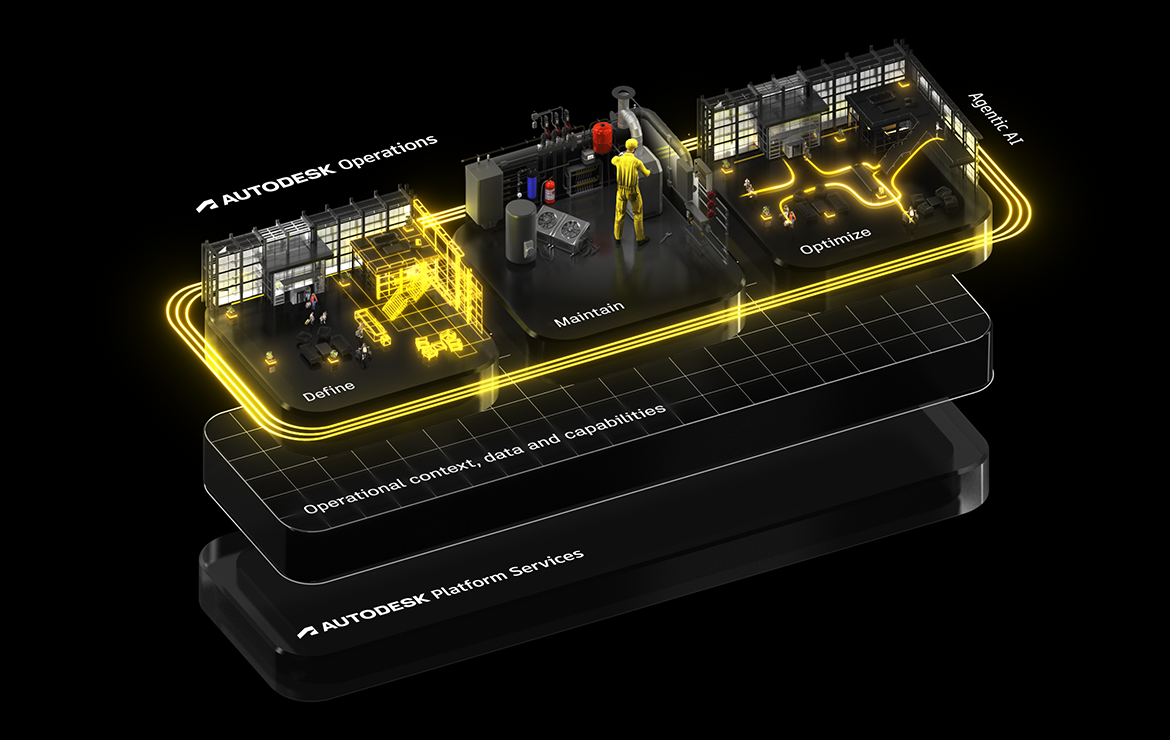
Read original
StrategySiemens
2 Mar 2026
BuildingsIndustrial AIAutonomySmart Infrastructure

Siemens is explicitly moving the building-management narrative from smart to autonomous

Siemens used Light + Building 2026 to frame Industrial AI, electrification and building technologies as the foundation for adaptive, increasingly autonomous building operations.

Decision impact

This reframes BMS and smart-building evaluations around closed-loop operational outcomes rather than monitoring and rules alone. For owners, the potential value is reduced manual intervention across energy, comfort, safety and maintenance.

What is not proven

Autonomous-building positioning does not establish which decisions are actually automated today, under what safeguards, or with what measurable performance. Autonomy is especially sensitive to controls, liability and override design.

PROVE TDI would verify

PROVE TDI would verify production use cases, human override, control-system scope, fail-safe behavior, cybersecurity, measurable energy/maintenance outcomes and the boundary between recommendations and autonomous action.

Original: Siemens showcases journey from smart to autonomous buildings at Light + Building 2026

Publisher: Siemens · Author: not stated by source

Read original

Why PROVE TDI adds value

News becomes useful when it changes the evidence model.

A vendor release is attributable evidence of what the vendor announced. It is not automatically evidence that the claimed capability, integration, commercial benefit or customer outcome is proven.

PROVE TDI connects each material signal to the vendor profile, competitive position and decision criteria, identifies the proof gap, and defines what would need to be verified before the signal can change a governed recommendation.