Decision amnesia: why organisations forget why they bought their technology
The contract survives. The reasoning doesn’t. Here’s how to keep it.
Three years after a major technology purchase, the renewal notice lands on someone's desk.
It's usually not the person who ran the evaluation. That person has moved on, been promoted, or changed companies. So the new owner asks a reasonable question: why did we choose this?
The answers tend to sound like this:
- "That was before my time."
- "I think it came down to price."
- "The demo was really good."
- "Ask Anna. Oh, she left."
Nobody is being careless. The organisation simply kept the purchase and lost the reasoning behind it. I call this decision amnesia, and after years on both sides of enterprise software deals, selling it and helping organisations buy it, I've seen it almost everywhere.
What survives a decision, and what doesn't
Decision amnesia is what happens when an organisation keeps a purchase but loses the reasoning that justified it.
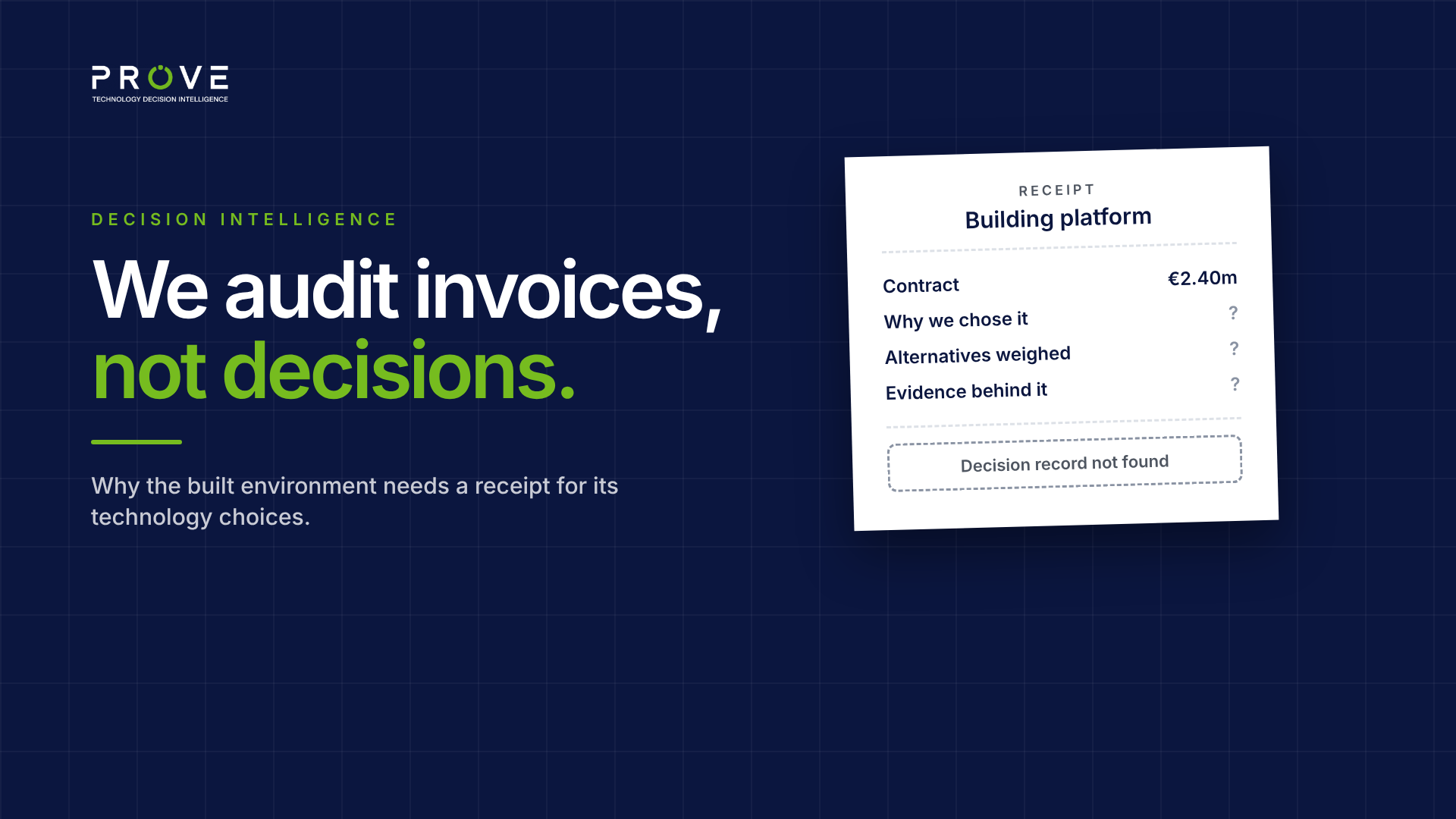
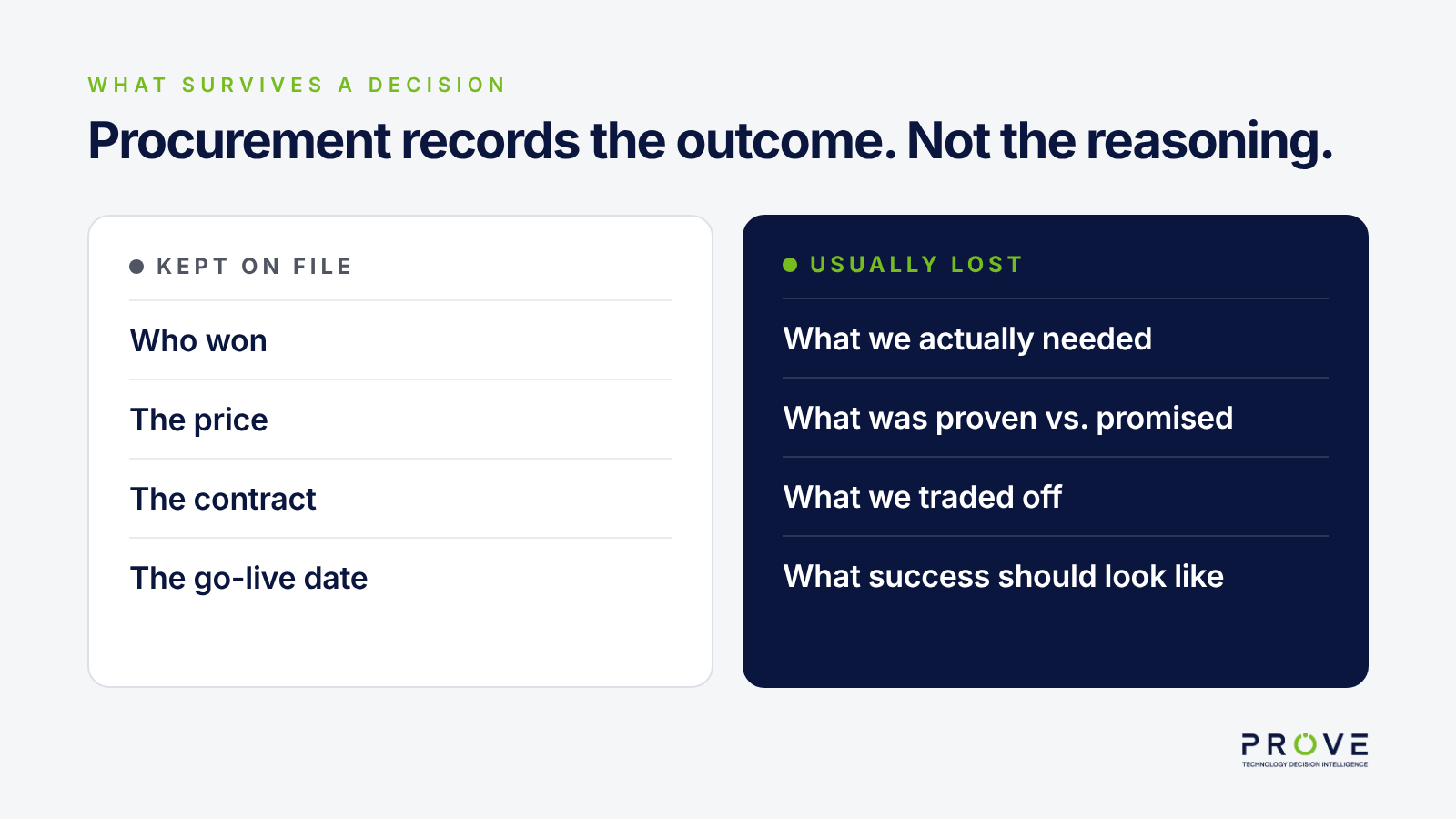
Look at what typically ends up on file after a technology selection. The vendor's name. The price. The signed contract. The go-live date. All of it is recorded, because procurement and finance need it.
Now look at what usually doesn't survive:
- What we actually needed. The requirements, in our own words, and which ones were truly mandatory.
- What was proven versus promised. Which capabilities we verified and which we took on trust.
- What we traded off. The weaknesses we knowingly accepted, and why.
- What success was supposed to look like. The outcomes we expected, and when we planned to check.
Procurement records the outcome. It rarely records the reasoning. And the reasoning is the part you need most when the decision comes up again.
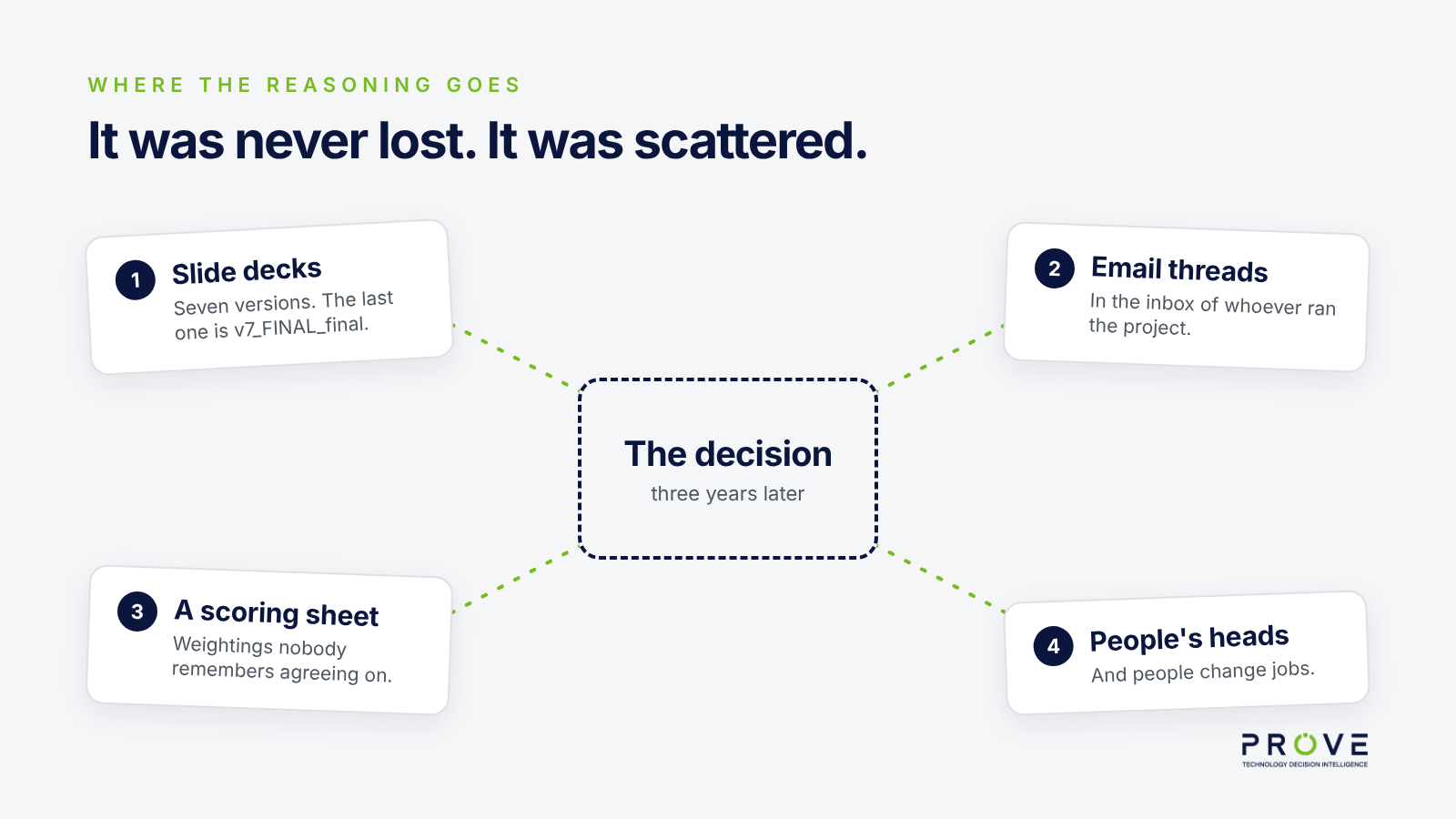
The reasoning was never lost. It was scattered.
If you go looking for the reasoning behind an old decision, you'll usually find pieces of it in four places:
- Slide decks. Steering-committee versions, each slightly different, the last one named something like v7_FINAL_final.
- Email threads. Buried in the inbox of whoever ran the project.
- A scoring spreadsheet. With weightings nobody remembers agreeing on.
- People's heads. And people change jobs.
None of these is designed to be found, read or trusted three years later.
Forgetting why is expensive
Decision amnesia feels like a documentation problem. In practice it's a commercial one.
- Renewals are negotiated blind. You can't hold a vendor to promises nobody wrote down, and you can't credibly threaten to switch if you don't know why you chose them over the alternatives.
- Evaluations restart from zero. The same market scan, the same longlist, the same demos, paid for twice.
- Nobody can judge the result. Did the system deliver? Compared to what? Without the original expectations, every answer is opinion.
- The same mistakes come back. Lessons only carry into the next decision if they were recorded in the first place.
Why it keeps happening
Decision amnesia isn't a discipline problem. It's built into how most technology decisions are run.
The process is designed to reach a choice, not to explain it. Evaluations are projects with an end date. Once the contract is signed, the project team disbands and its working material goes wherever project material goes.
The best story often wins. From the vendor side, I know how much effort goes into the pitch. A polished demo and a confident narrative are memorable. The evidence behind them, or the lack of it, rarely gets written down next to the decision.
Claims and facts get mixed together. A vendor's statement, an analyst's opinion and something your team actually tested often end up in the same column of the same spreadsheet. Months later, nobody can tell which was which.
People move on. The reasoning lives longest in the heads of the people who did the work. Technology lifecycles often run longer than their time in the role.
The fix: a decision record with four parts
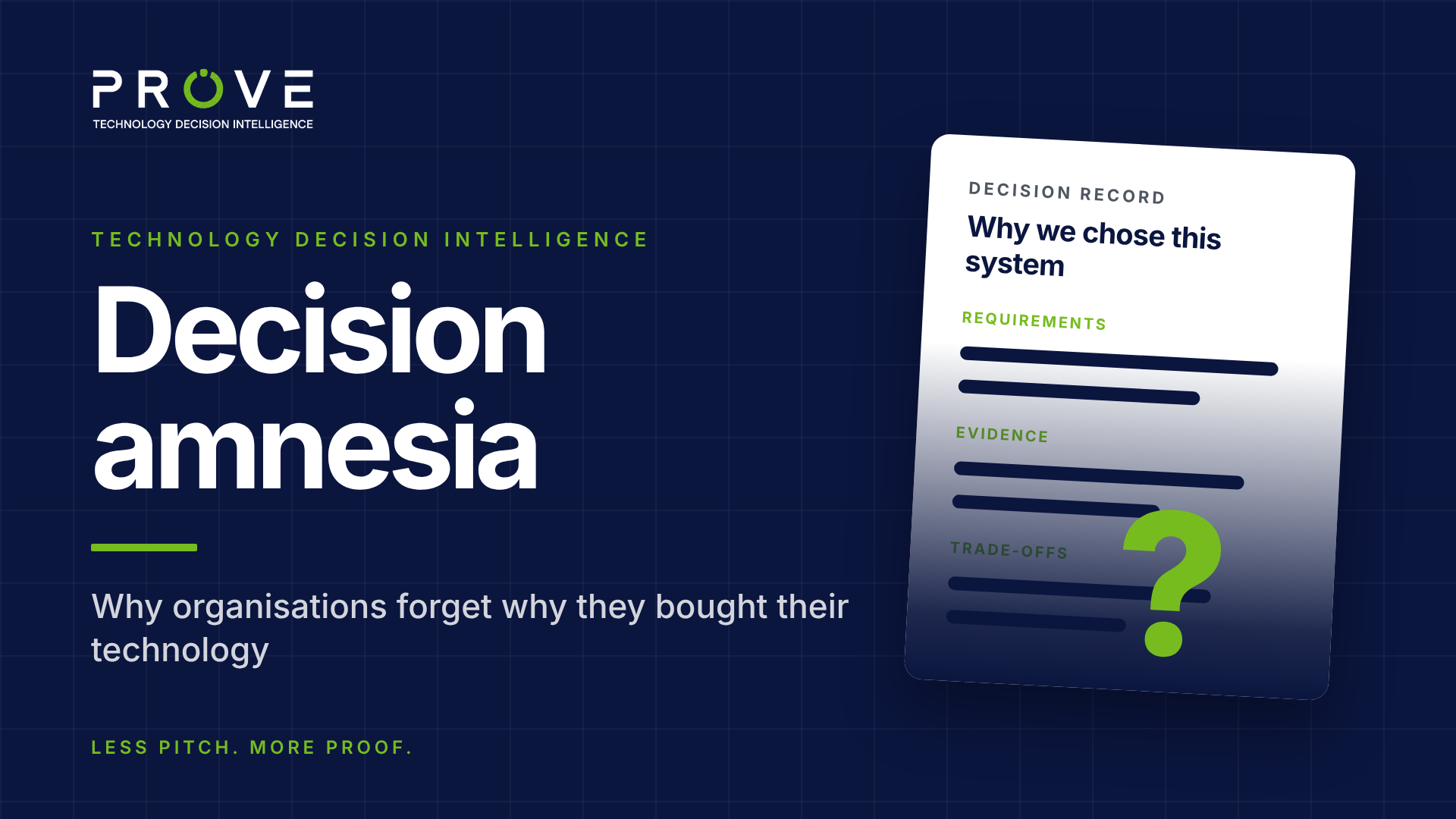
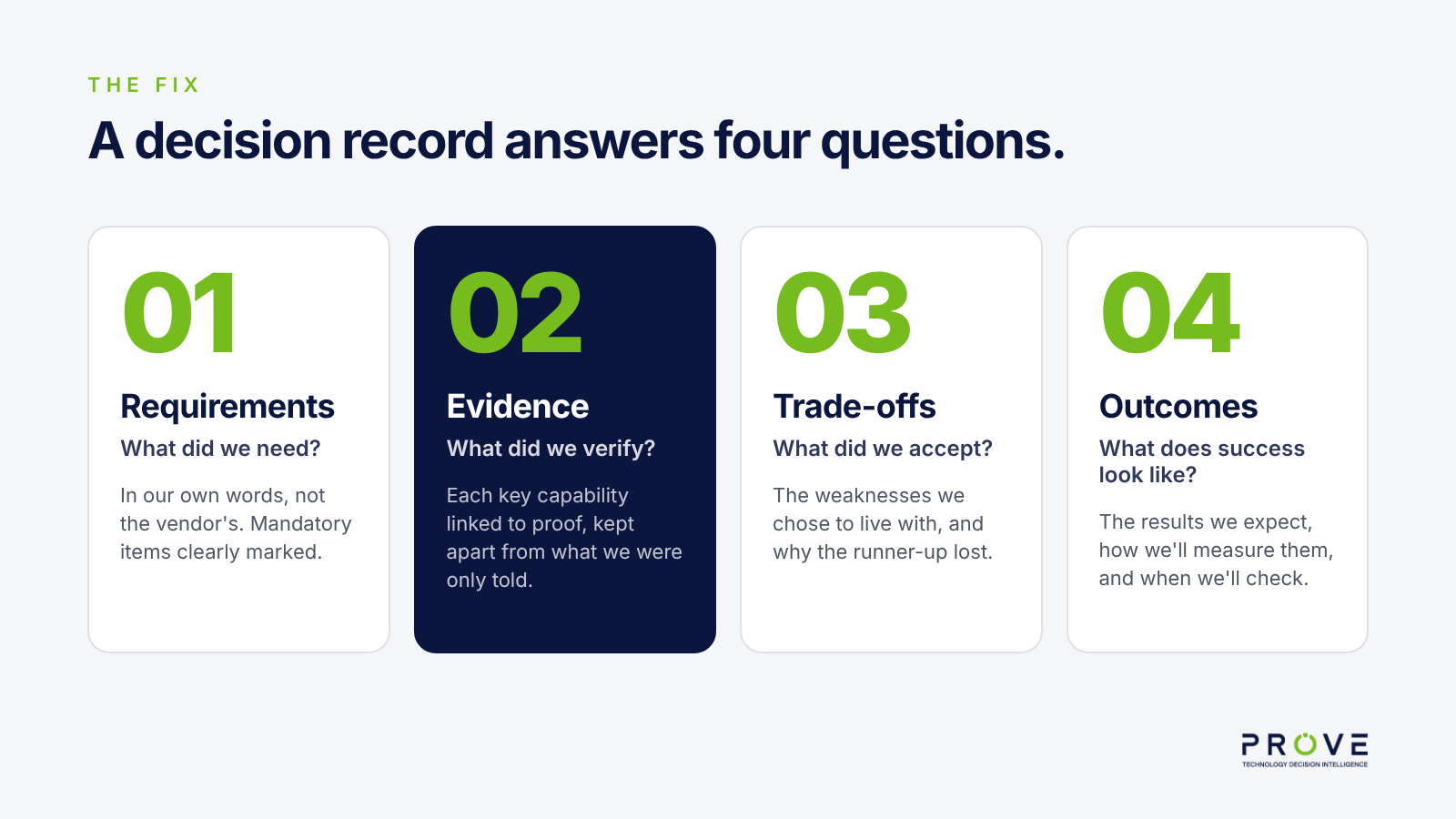
The answer isn't more documentation. It's the right documentation, kept with the decision itself. A useful decision record answers four questions:
- Requirements: what did we need? Written in our own words, not the vendor's, with mandatory requirements clearly marked.
- Evidence: what did we verify? Each important capability linked to where we saw it proven, kept separate from what we were only told.
- Trade-offs: what did we accept? The weaknesses of the chosen option, the strengths of the runner-up, and why we went this way anyway.
- Expected outcomes: what does success look like? The results we expect, how we'll measure them, and when we'll check.
If a decision record holds those four things, the person who inherits the system in three years can understand the choice without finding anyone who made it.
Keep claims and evidence apart
The most valuable habit is also the simplest: never let a claim and a fact sit in the same cell.
Treat every statement about a vendor as having a level of confidence. At the bottom is a claim: something the vendor says. Above that, something backed by a source you can point to. Higher still, something confirmed by more than one independent source. At the top, something your own team has verified, or an outcome you have actually seen in production.
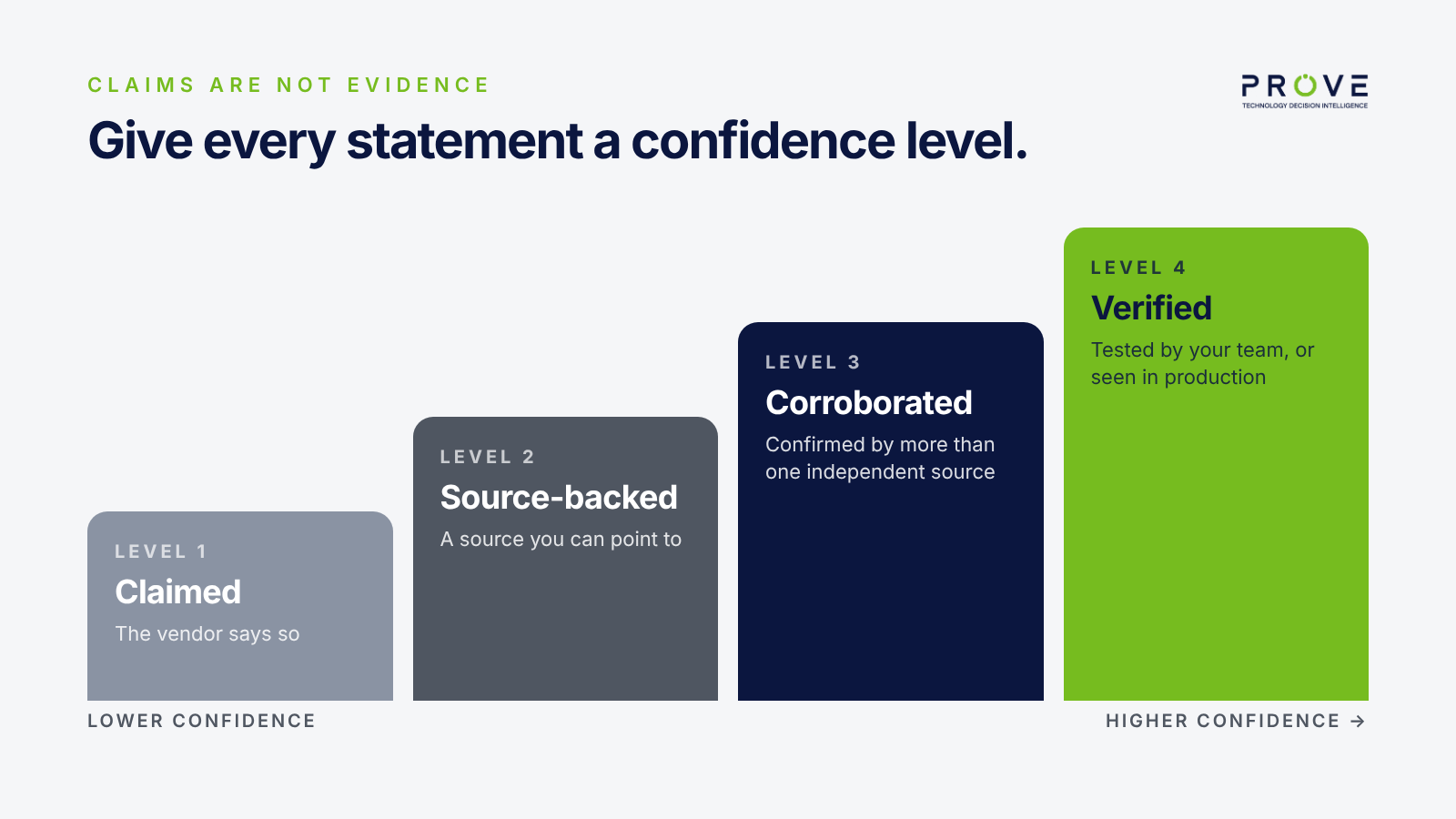
When a decision rests on claims, that's fine, as long as everyone can see it. The problem is when claims quietly turn into assumptions, and assumptions turn into "facts" nobody can trace.
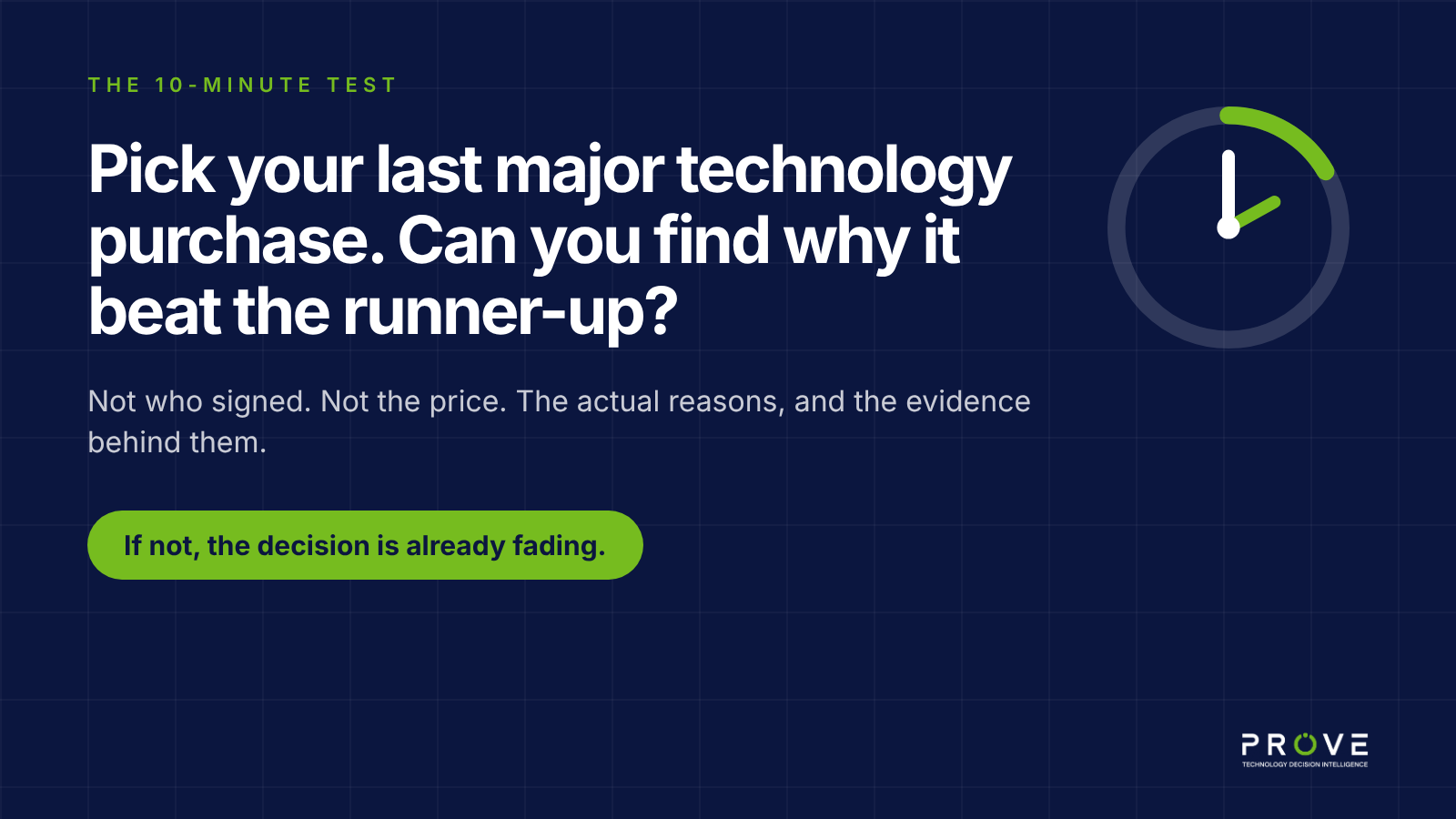
The 10-minute test
Here's a simple way to find out whether your organisation has decision amnesia.
Pick your last major technology purchase. Then try to find, within 10 minutes, the actual reasons it beat the runner-up. Not who signed. Not the price. The reasons, and the evidence behind them.
If you can, you're ahead of most organisations. If you can't, the decision has already started to fade, and it will be harder to defend at renewal than it should be.
Less pitch. More proof.
I've spent years on the selling side of enterprise software, and I've helped organisations on the buying side. Both sides lose when decisions are made on the strength of the story rather than the evidence. Strong products deserve to win on proof. Buyers deserve to remember why they chose them.
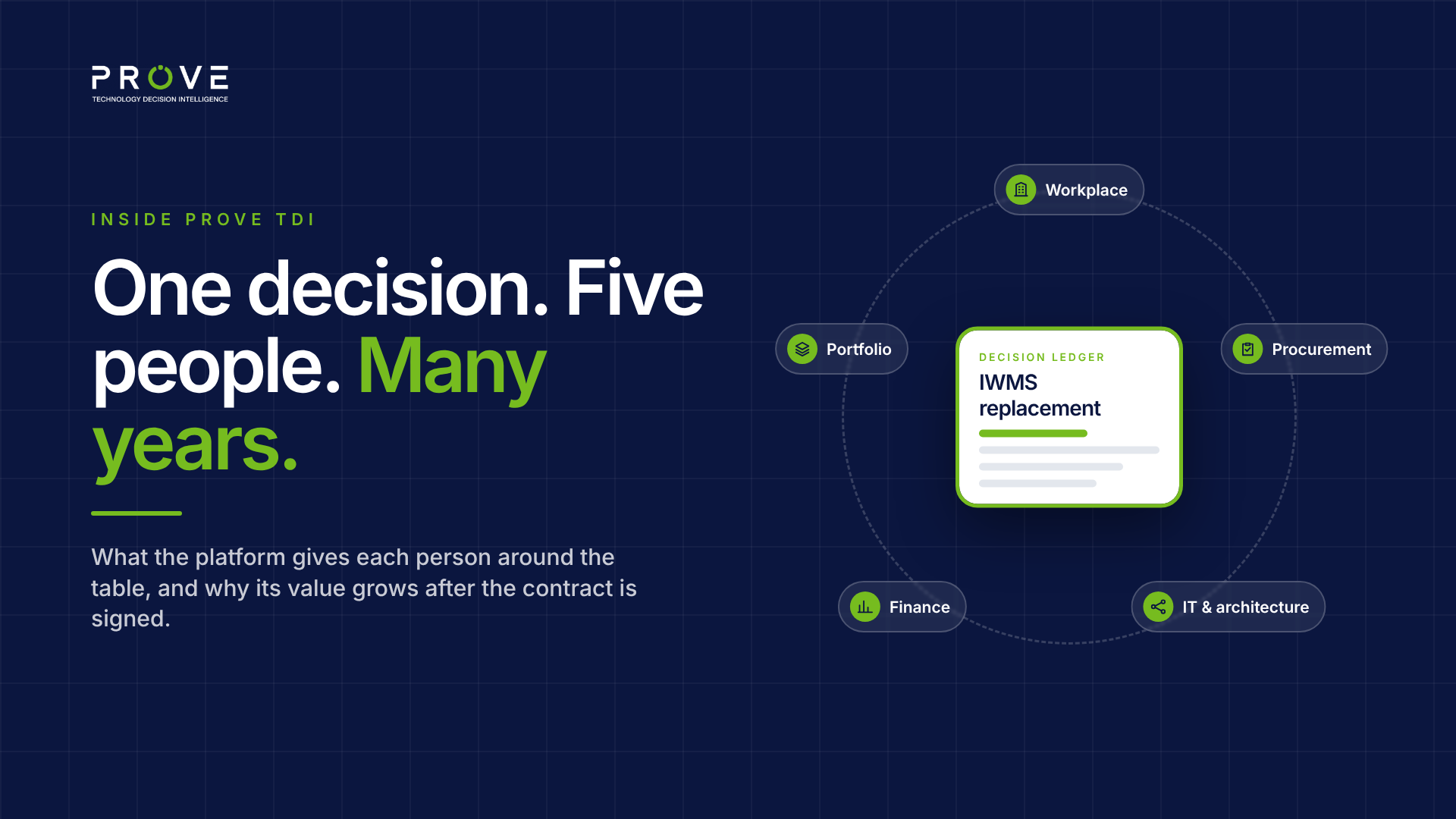
That's why we built PROVE TDI. It keeps requirements, attributable evidence and trade-offs together in one governed Decision Ledger, so the reasoning behind a technology decision outlives the team that made it.
Which system in your organisation can nobody explain anymore?
If you'd like to see what a governed decision record looks like, the 5-minute interactive demo needs no account.
Frederik Joustra is the founder of PROVE TDI, a technology decision intelligence platform for workplace, property and facilities teams.
Originally published on LinkedIn.